Note: The information provided on this site is for informational purposes only and is not a substitute for professional medical, therapeutic, or educational advice. Please consult qualified professionals for guidance.
Use this as a starting point to get oriented, explore basic resources, and consider how to begin. The information here reflects common questions families ask when reaching out. While it’s possible to start independently, we recommend connecting with a certified practitioner for expert support. Every journey is unique—prepare for challenging, revelatory, and deeply rewarding.
Spelled Communication—also called typed or text-based communication—refers to a group of alternative communication methods that build motor control and sensory regulation, enabling individuals who cannot reliably use speech to spell out their thoughts, one letter at a time.
Spellers learn to use gross motor movements to touch letters, bypassing the unreliable fine motor control common in individuals with complex communication needs. Motor training is deliberate and challenging, and always paired with sensory support tailored to the communicator’s unique profile. Training begins with large letter targets to establish purposeful movement and gradually progresses to smaller ones as control and accuracy improve.
Key methods include S2C™, Spellers Method™, and SOMA©RPM, which share a core
foundation: building intentional, on-demand motor control, especially coordinated upper-arm movement and visual-motor integration, to support accurate and reliable letter selection.
Sensory-motor integration is central to these approaches, addressing nervous system differences that interfere with purposeful movement. Sensory support helps regulate the body for more consistent communication.
Regular practice with trained communication partners (CPs), who provide structured prompting and individualized motor coaching, is challenging but essential for progress. CPs are often family members, caregivers, or other trusted supporters. Every speller progresses at their own pace.
Practitioner guidance is ideal, but you can also start at home with your own with free instructional videos from the C4A Academy.
Different profiles can benefit, including neurodivergent identities like autism and ADHD; neuromotor disabilities such as apraxia, dyspraxia, and cerebral palsy; and developmental disabilities like Down syndrome, where expressive communication may be impacted by motor or sensory differences.
For those who speak, too—many spellers can speak or type, but their output may not always reflect what they truly mean. Spelled communication helps align intention with authentic expression.
Want to understand spelled communication from the source? Watch this powerful short video by a nonspeaking self-advocate who shares what it is, what it isn’t, and why it matters.
Clinical research and autistic lived experience point to motor planning impairments— especially global apraxia—as a primary barrier preventing many nonspeakers from communicating reliably.
These conditions interfere with the brain’s ability to coordinate voluntary movement, making speech and other purposeful actions difficult despite intact comprehension. In global apraxia, this includes challenges with limb, trunk, ocular, and oral movements as part of a broader motor control disorder
Spelled communication addresses this ‘brain-body disconnect’ by training motor control and supporting sensory regulation, helping to build the motor pathways needed for intentional communication.
While spelled communication has proven effective for many—especially those for whom other methods have failed—success is not guaranteed, and individualized support remains essential.
Spelled communication supports individuals with complex communication needs—those who cannot reliably use speech to express themselves fully. This includes people with no speech, limited or inconsistent speech, and those who use echolalia or scripted language.
Spelled communication is gaining momentum, but public systems and professional institutions have been slow to recognize its legitimacy. Like Braille and ASL before it, this approach faces an uphill battle for acceptance. Braille took nearly a century to gain widespread adoption; ASL over 140 years.
Despite growing evidence from lived experiences and observable progress, some institutions continue to question the validity of these methods, often based on outdated assumptions that conflate present-day practices with earlier approaches. While these earlier contact-based methods played a vital role in supporting nonspeakers, and continue to serve many effectively today, modern spelled communication methods eliminate physical touch and emphasize motor skill development—safeguards that help ensure the autonomy of the communicator and prevent facilitator influence.
At the same time, barriers like high private training costs, lack of insurance coverage, and limited public awareness keep these life-changing methods out of reach for many, particularly those in underserved communities.
A growing grassroots movement, led by nonspeaking individuals and their allies, is working to change that—demanding recognition, funding, and equitable access for all.
Many nonspeakers report that they understood language and could read from an early age. As such, once given access to a reliable method it’s clear that many can spell at or above age-appropriate levels. The barrier isn’t understanding—it’s motor. Spelled communication builds the motor skills needed to point to letters consistently, rather than teaching spelling as a cognitive task.
Spelling or typing words doesn’t always mean someone can communicate intentionally or consistently. Many individuals with motor and sensory challenges can produce words, but not always the ones they mean. Spelled communication helps build purposeful, on-demand motor control—so your child can express their actual thoughts with accuracy and autonomy.
Some families begin with independent practice and free resources, like C4A Academy’s no-cost instructional videos. But building reliable, purposeful communication requires motor coaching and sensory support tailored to the individual. Working with a trained practitioner, even occasionally, can provide critical guidance, troubleshoot challenges, and support long-term success. It’s strongly recommended whenever possible.
Many practitioners offer virtual coaching and parent/caregiver training. Some families travel periodically for in-person sessions while practicing daily at home. Click here to view our resources.
No. Spelled communication can be effective for nonspeaking, minimally speaking, and unreliably speaking people with a range of diagnoses, including apraxia, dyspraxia, Down syndrome, cerebral palsy, and other conditions that impact speech and motor planning.
Even if a person has speech, they may be unable to use it reliably or purposefully to express their own thoughts, needs, and ideas. Spelled communication supports building intentional, consistent communication, enabling individuals to share complex language and their true inner voice.
Typing ability does not always translate into consistent, purposeful communication. Many minimally or unreliably speaking individuals can type words or scripts but struggle to express their own novel ideas.
Many nonspeakers experience a disconnect between their brain and body—so while they may understand the task, their brain’s signals aren’t reaching their hand, arm, or eyes in a way that allows for them to respond purposefully. This isn’t a lack of interest or comprehension. Structured motor coaching breaks the spelling process into small, achievable steps and helps build new motor pathways through coached practice.
Every speller’s journey is different. Building reliable communication can take months or years of consistent practice, depending on motor challenges, sensory regulation needs, and frequency of supported practice.
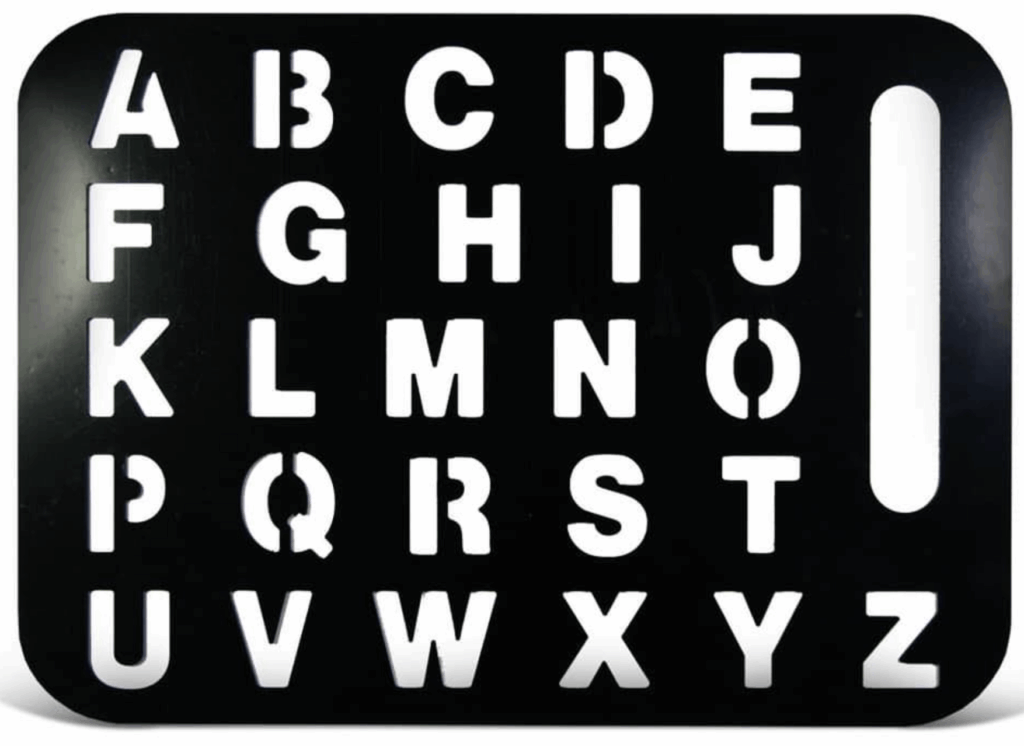
Most spellers progress through a hierarchy of targets—starting with large, multi-part letterboards and gradually advancing to single boards and keyboards—as they strengthen ocular motor control, arm coordination, and purposeful movement. Fluency emerges over time as these motor skills become more precise and automatic.
Search results often reflect outdated narratives and institutional biases. Many critiques of spelled communication conflate it with earlier controversies around Facilitated Communication, ignoring the real experiences of nonspeakers who have found their voices through these methods. Meanwhile, new research and the growing body of nonspeaking self-advocacy continue to demonstrate the validity and importance of this work. We encourage families to learn directly from nonspeakers and trained professionals, and to examine the growing body of lived experience, research, and practitioner insight.
Facilitated Communication (FC) emerged in the 1980s as an alternative communication method in which a facilitator provides physical support—typically at the hand, wrist, or forearm—to help a nonspeaking individual type or point to letters. This support is intended to assist with motor initiation, stabilization, and sensory feedback, not to direct content. FC has been a lifeline for many people with complex communication needs, giving individuals a way to communicate and advocate for themselves. The targeted physical support in FC enables—rather than overrides—authentic expression.
While FC remains a vital tool for some, it has been mired in controversy and often dismissed due to concerns about facilitator influence. Newer spelled communication methods build on the idea of motor support but have evolved: best practices now avoid physical touch, instead coaching individuals to develop independent motor pathways, offering a path forward that directly addresses past criticisms. In all cases, the goal is autonomous communication.
Yes. Spelled communication complements a multimodal communication approach, supporting each individual’s unique needs in combination with other tools and strategies. It can be used alongside speech-generating devices, picture-based systems, gestures, and other AAC methods to create a flexible, personalized communication system.
